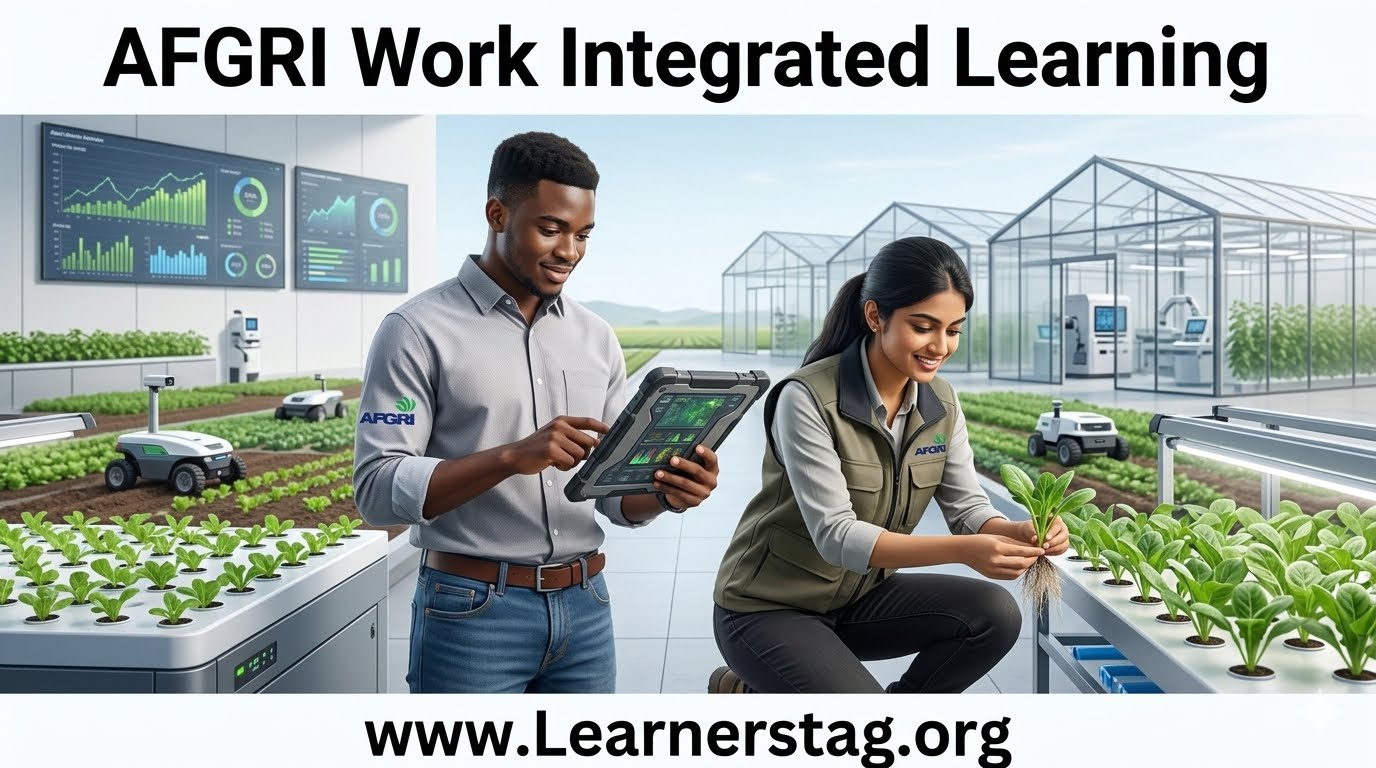
AFGRI is recruiting Agriculture students for its AFGRI 2026 Work Integrated Learning Programme at Vastfontein Farm in Pretoria North.
For many Agriculture students, the classroom is only the beginning of the learning journey. Understanding crop production, irrigation systems and sustainable farming practices through textbooks provides an important foundation, but true confidence often comes from applying that knowledge in a real working environment.
That is why Work Integrated Learning (WIL) programmes have become an essential part of agricultural education in South Africa. They allow students to gain practical experience while working alongside experienced professionals, preparing them for the realities of modern farming and agribusiness.
AFGRI Farmer Development has opened applications for its 2026 Work Integrated Learning Programme, offering five internship opportunities for students who need practical workplace experience to complete their National Diploma qualifications. Successful applicants will spend 12 months at Vastfontein Farm in Pretoria North, where they will participate in meaningful workplace activities designed to develop both technical skills and professional confidence.
Rather than simply observing daily operations, interns will contribute to projects, support experienced teams and gain valuable exposure to agricultural practices that can strengthen their future careers.
Why Practical Agricultural Experience Matters
Agriculture continues to play a vital role in South Africa’s economy. As food production methods evolve, employers increasingly seek graduates who can combine academic knowledge with practical problem-solving skills.
Many graduates discover that employers value workplace experience almost as highly as formal qualifications. Understanding how farming operations function, communicating with multidisciplinary teams and adapting to changing environmental conditions are all skills that are difficult to develop in a classroom alone.
Work Integrated Learning programmes bridge this gap by giving students an opportunity to experience professional agricultural operations before graduating.
For students planning careers in crop production, irrigation management, precision agriculture or farm operations, a structured internship can significantly strengthen future employment opportunities.
About the AFGRI Work Integrated Learning Programme
The programme has been developed to support students who are required to complete Work Integrated Learning (WIL) as part of their National Diploma qualification.
Successful candidates will join AFGRI Farmer Development on a 12-month fixed-term internship, where they will receive practical workplace exposure relevant to their academic studies and career aspirations.
The internship takes place at Vastfontein Farm in Pretoria North, providing participants with an opportunity to learn in a real agricultural production environment while working with experienced professionals.
Throughout the programme, interns will be encouraged to develop technical competence, workplace professionalism and a deeper understanding of agricultural operations.
What Participants Will Be Doing
Interns will contribute to meaningful workplace activities rather than simply shadowing employees. Depending on operational requirements and learning objectives, participants may be involved in:
- Working with cross-functional teams on Work Integrated Learning projects.
- Supporting agricultural operations and departmental activities.
- Completing practical assignments linked to their qualification.
- Learning from experienced supervisors and technical specialists.
- Assisting with projects that contribute to business objectives.
- Developing professional workplace habits through day-to-day responsibilities.
This practical approach allows students to experience the realities of working within the agricultural sector while strengthening the knowledge gained during their studies.
Who Should Apply?
The programme is intended for students who are preparing to complete their National Diploma qualifications and require Work Integrated Learning to graduate.
Applicants should meet the following requirements:
- Be a South African citizen under the age of 35.
- Be registered, or planning to register, for the final year of a National Diploma in Agriculture (Crop Production) or National Diploma in Agriculture (Irrigation Systems) during 2026.
- Require Work Integrated Learning as a compulsory part of the qualification.
- Submit an academic record together with an official letter from their institution confirming the WIL requirement.
- Have not worked full-time for more than one year within their field of study.
- Ideally be based in the city where the internship is offered.
- Demonstrate good academic performance, which will be considered an advantage during the selection process.
Meeting the minimum requirements does not automatically guarantee selection, as the recruitment process remains competitive.
Why This Opportunity Stands Out
Many internships focus only on administrative experience, but agricultural careers require practical field exposure.
Working on a functioning farm allows students to see how agricultural theories are applied under real conditions. From observing crop management practices to understanding operational planning, workplace learning helps build confidence that cannot be developed through classroom learning alone.
The programme also encourages collaboration, communication and professional development—qualities that employers increasingly value alongside technical expertise.
For students who hope to build careers in commercial farming, agribusiness, irrigation management or agricultural consultancy, this experience can become an important stepping stone after graduation.
Skills You Can Develop During the Programme
One of the greatest advantages of Work Integrated Learning is that students begin developing skills that employers look for when recruiting graduates. While technical knowledge remains important, many organisations also place a strong emphasis on workplace behaviour, communication and problem-solving.
During the 12-month programme, successful interns may strengthen their ability to:
- Apply classroom knowledge to real agricultural operations.
- Work effectively within multidisciplinary teams.
- Plan and complete assigned projects.
- Communicate professionally with supervisors and colleagues.
- Observe workplace health and safety standards.
- Improve analytical and problem-solving skills.
- Develop organisational and time management abilities.
- Adapt to changing operational priorities in a professional environment.
These transferable skills remain valuable long after the internship has ended and can strengthen future job applications across the agricultural sector.
Why Work Integrated Learning Is More Than a Graduation Requirement
Many students see Work Integrated Learning simply as a qualification requirement, but it can become one of the most influential stages of a professional career.
Employers often look beyond academic results when evaluating graduates. They want candidates who understand workplace expectations, can work independently, communicate effectively and adapt to real operational environments.
An internship provides the opportunity to demonstrate these qualities while learning from experienced professionals. It also helps students build confidence, develop professional networks and gain practical achievements that can be highlighted on a CV or during future interviews.
For graduates entering a competitive job market, this practical experience can become an important advantage.
Related programmes you can also apply for:
- Rand Water Graduate Programme 2026
- SGS Health and Safety Internship
- eThekwini Municipality Internship Programme 2026/202
Career Opportunities After Completing the Programme
Completing a Work Integrated Learning placement does not automatically guarantee permanent employment. However, it provides valuable practical experience that can improve future career prospects.
Depending on your qualification and long-term interests, experience gained during the programme may support careers such as:
- Crop Production Technician
- Irrigation Technician
- Farm Production Supervisor
- Agricultural Extension Officer
- Precision Agriculture Specialist
- Agribusiness Officer
- Agricultural Consultant
- Farm Operations Coordinator
- Production Planner
- Agricultural Research Assistant
The knowledge gained through workplace exposure can also provide a stronger foundation for further study or professional registration where applicable.
How to Prepare a Strong Application
Before submitting your application, take time to ensure that all required documents are complete and up to date.
A well-prepared application should include:
- An updated Curriculum Vitae (CV).
- Certified copy of your South African ID.
- Certified copy of your academic record.
- An official letter from your educational institution confirming that Work Integrated Learning is a compulsory requirement for your qualification.
- Any additional supporting documents requested during the online application process.
Before submitting, carefully check that your contact details, email address and cellphone number are accurate so that recruiters can reach you if you are shortlisted.
Common Application Mistakes to Avoid
Every year, capable applicants lose opportunities because of avoidable mistakes. Taking a few extra minutes to review your application can make a meaningful difference.
Avoid these common errors:
- Submitting an incomplete application.
- Forgetting to attach the institutional letter confirming the WIL requirement.
- Uploading documents that are difficult to read.
- Waiting until the closing date to apply.
- Using an outdated CV that does not reflect your latest academic progress.
- Providing incorrect contact details.
- Ignoring spelling and grammar mistakes in your CV.
Submitting a professional and well-organised application demonstrates attention to detail and genuine interest in the opportunity.
Frequently Asked Questions
Who can apply?
The programme is intended for South African students under the age of 35 who are completing a National Diploma in Agriculture (Crop Production) or Agriculture (Irrigation Systems) and require Work Integrated Learning to graduate.
How long is the internship?
Successful candidates will be appointed on a 12-month fixed-term internship contract.
Where will the internship take place?
The programme will be based at Vastfontein Farm in Pretoria North.
Is previous work experience required?
No. However, applicants should not have worked full-time in their field of study for more than one year.
Why is the institutional letter important?
The official letter confirms that Work Integrated Learning is a compulsory requirement for completing your qualification. Without this confirmation, your application may not meet the programme requirements.
What is the closing date?
Applications close on 21 July 2026.
Why Opportunities Like This Matter for South Africa
South Africa’s agricultural sector continues to evolve through innovation, technology and sustainable farming practices. Developing graduates who understand both academic principles and practical farm operations is essential for improving productivity, strengthening food security and supporting rural economic growth.
Work Integrated Learning programmes play an important role in preparing the next generation of agricultural professionals by helping students develop practical skills before entering full-time employment.
For many participants, this experience becomes the bridge between graduation and a successful career.
How to Apply
Interested candidates should submit their applications through the official AFGRI recruitment platform before the closing date of 21 July 2026.
Ensure that all required supporting documents, including your academic record and the official Work Integrated Learning confirmation letter from your institution, are included with your application.
Final Thoughts
The AFGRI Work Integrated Learning Programme 2026 offers more than the practical experience required to complete a qualification. It provides an opportunity to learn from experienced agricultural professionals, develop workplace confidence and gain exposure to modern farming operations within a respected organisation.
For students passionate about crop production or irrigation systems, this internship represents an opportunity to transform classroom knowledge into practical skills while building a stronger foundation for future employment. Preparing a complete application and submitting it before the closing date could be the first step towards a rewarding career in South Africa’s agricultural sector.

Hello, I am Tenae Nkosi, founder, author, and administrator of LearnersTag. I graduated with a Diploma in Information Administrative Management from Tshwane University Of Technology in 2022.
For enquiries, collaborations, or advertising opportunities, contact us at info@learnerstag.org or visit LearnersTag Official Website.